
From the Arcane archives
Alpena Caladrius
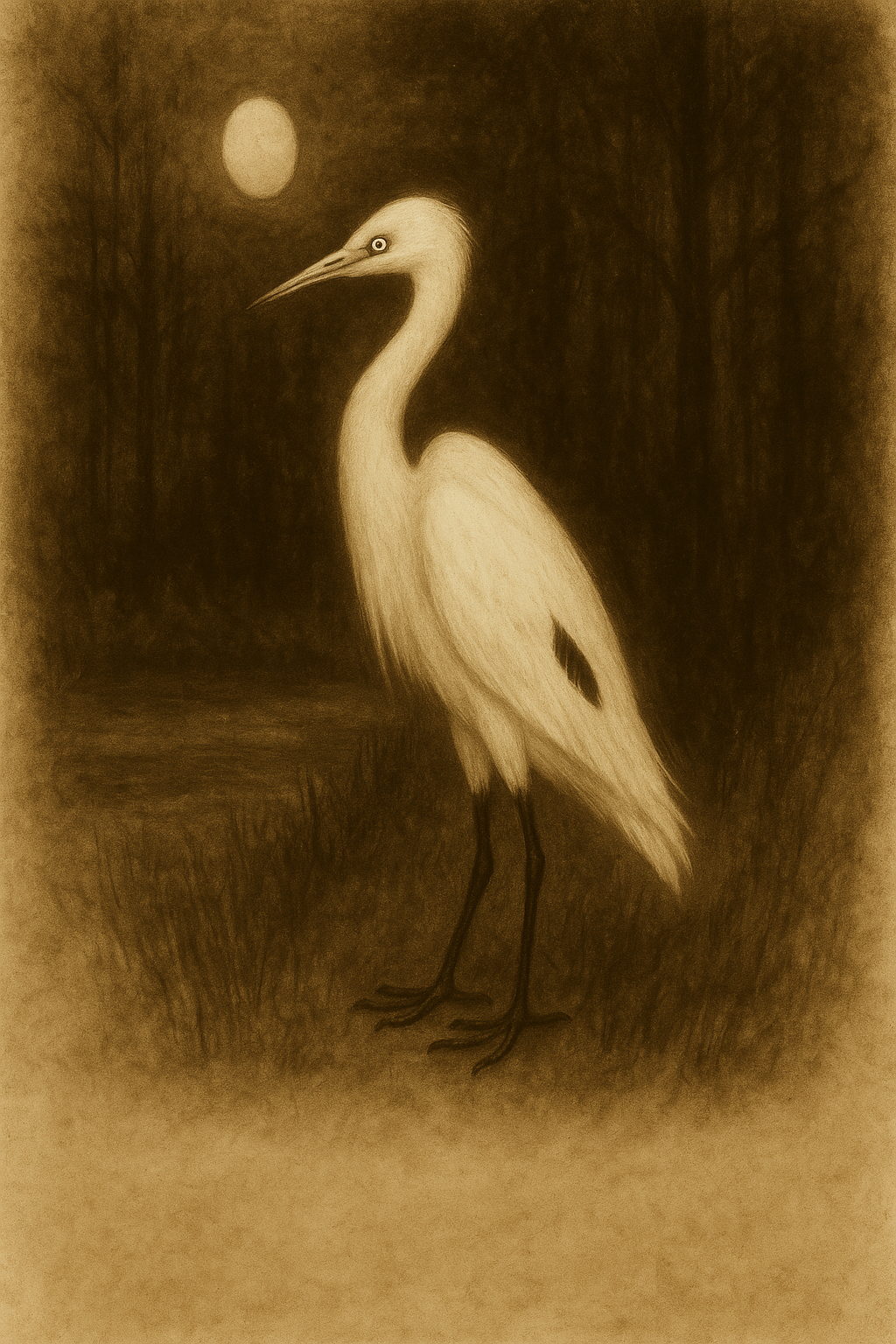
A pale shape in the mist. A gaze that carries a question.
Explore the legend ↓- Territory
- Northeast Michigan
- Alias
- The Pale Bird of Alpena
- Nature
- Silent & elusive
- Distinctive detail
- One dark feather
The story so far
Between hope and mystery.
The Arcane’s accounts follow a silent white bird through illness, recovery, and unanswered questions.
- 1904
The logging journal
A logger records a white bird near a medical cabin before an unexpected recovery.
- 1919
The Ossineke account
A farmer reports a visit during the flu, leaving a darker question about the bird’s gaze.
- April 3, 1928
Kosinski’s encounter
Near Alpena, a pale figure emerges from the fog as a local boy recovers.
- 1937
A single feather
The archive records a white feather in a locked room at Hillgrove Sanitarium.
Field notes & folklore
Open the archives
Explore the full accounts, illustrations, and references.
The Legend of the Caladrius
The Legend of the Caladrius
Field Report – April 3, 1928
Field Report – April 3, 1928
Filed by: J. Kosinski – Northeast Michigan, outskirts of Alpena
“I arrived before dawn. Alpena is colder than I expected. The wind here carries something old but it was also still and sharp through the fog. Locals spoke of a bird, a white one, seen the night before above the shoreline pines near Thunder Bay. A boy, stricken with fever for three days, had suddenly improved.
I found no footprints. No feathers. But the mother insisted something luminous perched outside the boy’s window at first light. She called it “the angel bird.” I believed it to be the same creature referenced in a 1904 logging journal I found weeks ago, a Caladrius, if the name still fits.
Just before leaving, I saw it. For the first time. A pale figure emerged from the fog across the water; tall, elegant, and still. It stood no more than thirty paces from me. White as bone, but with a single black feather folded into the edge of its wing. Just one. At first I thought it was an egret. But egrets don’t move like that. They don’t stand still for hours without breathing. They don’t look through you.
It turned its head and looked directly at me. Not startled. Not welcoming. Observing. Then, without a sound, it lifted off and disappeared behind the tree line. The boy recovered by evening.
There are rumors the bird does not always heal. Some say if it turns away, if it refuses to meet your gaze, then your fate is sealed. A farmer south of Ossineke claimed to see it land in his barn during the flu of 1919. His wife died two days later.
Whether it chooses, warns, or simply watches, I do not know. But today, I saw it. And it saw me.”

Jacob Kosinski Field Sketch 1928
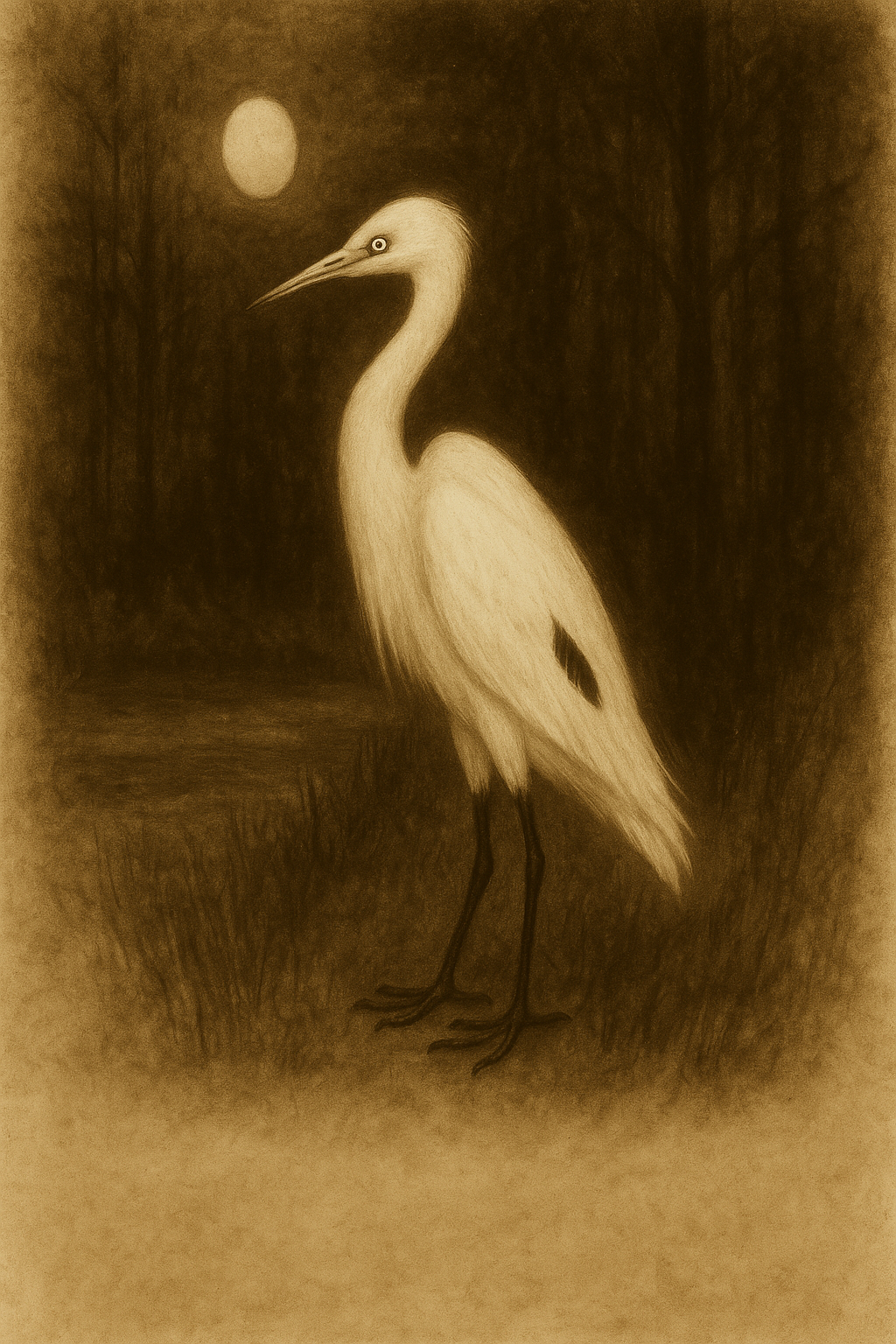
Jacob Kosinski Field Sketch 1919 - concept as described by farmer
Name: Caladrius
Alias: The Pale Bird of Alpena
Classification: Benevolent Cryptid / Symbol of Healing
Region: Northeast Michigan, woodlands and inland lakes near Alpena
Status: Extremely rare; active sightings concentrated during historical illness outbreaks
Known Lore:
The Caladrius is a snow-white bird of ethereal appearance, standing 3 to 4 feet tall, with eyes like pale quartz and feathers that appear to shimmer in moonlight. Witnesses claim it emits no sound. Even its wingbeats are silent. The creature is believed to appear only to those gravely ill or emotionally lost, especially in times of communal sickness or crisis.
If the Caladrius makes eye contact, the legend says the afflicted will recover. If it turns its head and refuses to look, death is imminent. It has never been observed eating, nesting, or hunting. Some claim it is not truly a cryptid at all but a spirit, or something older.
Cultural Parallels:
This being may be a regional echo of the Caladrius of medieval bestiaries. A bird said to dwell in royal chambers, taking on the illnesses of kings. The Alpena variant appears more solitary and forest-bound, perhaps evolved or connected through an older migratory lineage.
Artifact Evidence:
1904: A logger noted a large bird spending an unusual amount of time loitering near a makeshift medical cabin for local workers. One logger had developed a severe infection in his leg. Within 3 days, his fever broke and was able to start hobbling around, much to everyone’s surprise.
1919: A farmer outside Ossineke claimed to see the bird land in his barn. His wife passed 2 days later.
1928: Interview with a local woman claimed to have seen the caladrius, her boy sick but then recovered.
1937: A single white feather found in a locked room at the Hillgrove Sanitarium (now demolished).
In Roman mythology, the caladrius was a bird with snow-white plumage that lived in the house of the king. According to folklore, the bird had the power to absorb disease from a sick person. It would then fly away, dispelling the illness and curing the sick person, and itself, in the process. Another lore that predicted the fate of the patient: If the Caladrius looked into the patient’s face they would live; if it looked away, they would die. When the bird drew out the illness it would fly up to the sun, where the disease would be destroyed/burned-up. The manner in which it gave its prognosis represented how the person’s god turned his face away from unrepentant sinners. For those who repent he turned his face towards them, forgiving them. Some scholars think the caladrius was based upon a real bird, possibly a dove, or alternatively a water bird like a heron or a plover.
Content adapted from Wikipedia, licensed under CC BY-SA 4.0 Source page: https://en.wikipedia.org/wiki/Caladrius
Continue your journey
Another legend awaits.
The Legend of the Caladrius
Field Report – April 3, 1928
Filed by: J. Kosinski – Northeast Michigan, outskirts of Alpena
“I arrived before dawn. Alpena is colder than I expected. The wind here carries something old but it was also still and sharp through the fog. Locals spoke of a bird, a white one, seen the night before above the shoreline pines near Thunder Bay. A boy, stricken with fever for three days, had suddenly improved.
I found no footprints. No feathers. But the mother insisted something luminous perched outside the boy’s window at first light. She called it “the angel bird.” I believed it to be the same creature referenced in a 1904 logging journal I found weeks ago, a Caladrius, if the name still fits.
Just before leaving, I saw it. For the first time. A pale figure emerged from the fog across the water; tall, elegant, and still. It stood no more than thirty paces from me. White as bone, but with a single black feather folded into the edge of its wing. Just one. At first I thought it was an egret. But egrets don’t move like that. They don’t stand still for hours without breathing. They don’t look through you.
It turned its head and looked directly at me. Not startled. Not welcoming. Observing. Then, without a sound, it lifted off and disappeared behind the tree line. The boy recovered by evening.
There are rumors the bird does not always heal. Some say if it turns away, if it refuses to meet your gaze, then your fate is sealed. A farmer south of Ossineke claimed to see it land in his barn during the flu of 1919. His wife died two days later.
Whether it chooses, warns, or simply watches, I do not know. But today, I saw it. And it saw me.”
Jacob Kosinski Field Sketch 1928
Jacob Kosinski Field Sketch 1919 - concept as described by farmer
Name: Caladrius
Alias: The Pale Bird of Alpena
Classification: Benevolent Cryptid / Symbol of Healing
Region: Northeast Michigan, woodlands and inland lakes near Alpena
Status: Extremely rare; active sightings concentrated during historical illness outbreaks
Known Lore:
The Caladrius is a snow-white bird of ethereal appearance, standing 3 to 4 feet tall, with eyes like pale quartz and feathers that appear to shimmer in moonlight. Witnesses claim it emits no sound. Even its wingbeats are silent. The creature is believed to appear only to those gravely ill or emotionally lost, especially in times of communal sickness or crisis.
If the Caladrius makes eye contact, the legend says the afflicted will recover. If it turns its head and refuses to look, death is imminent. It has never been observed eating, nesting, or hunting. Some claim it is not truly a cryptid at all but a spirit, or something older.
Cultural Parallels:
This being may be a regional echo of the Caladrius of medieval bestiaries. A bird said to dwell in royal chambers, taking on the illnesses of kings. The Alpena variant appears more solitary and forest-bound, perhaps evolved or connected through an older migratory lineage.
Artifact Evidence:
1904: A logger noted a large bird spending an unusual amount of time loitering near a makeshift medical cabin for local workers. One logger had developed a severe infection in his leg. Within 3 days, his fever broke and was able to start hobbling around, much to everyone’s surprise.
1919: A farmer outside Ossineke claimed to see the bird land in his barn. His wife passed 2 days later.
1928: Interview with a local woman claimed to have seen the caladrius, her boy sick but then recovered.
1937: A single white feather found in a locked room at the Hillgrove Sanitarium (now demolished).
In Roman mythology, the caladrius was a bird with snow-white plumage that lived in the house of the king. According to folklore, the bird had the power to absorb disease from a sick person. It would then fly away, dispelling the illness and curing the sick person, and itself, in the process. Another lore that predicted the fate of the patient: If the Caladrius looked into the patient’s face they would live; if it looked away, they would die. When the bird drew out the illness it would fly up to the sun, where the disease would be destroyed/burned-up. The manner in which it gave its prognosis represented how the person’s god turned his face away from unrepentant sinners. For those who repent he turned his face towards them, forgiving them. Some scholars think the caladrius was based upon a real bird, possibly a dove, or alternatively a water bird like a heron or a plover.
Content adapted from Wikipedia, licensed under CC BY-SA 4.0 Source page: https://en.wikipedia.org/wiki/Caladrius