
Le Boisnu
A quiet guardian of Michigan's forests who proves that no act of restoration is too small to matter.
The Little Repairman
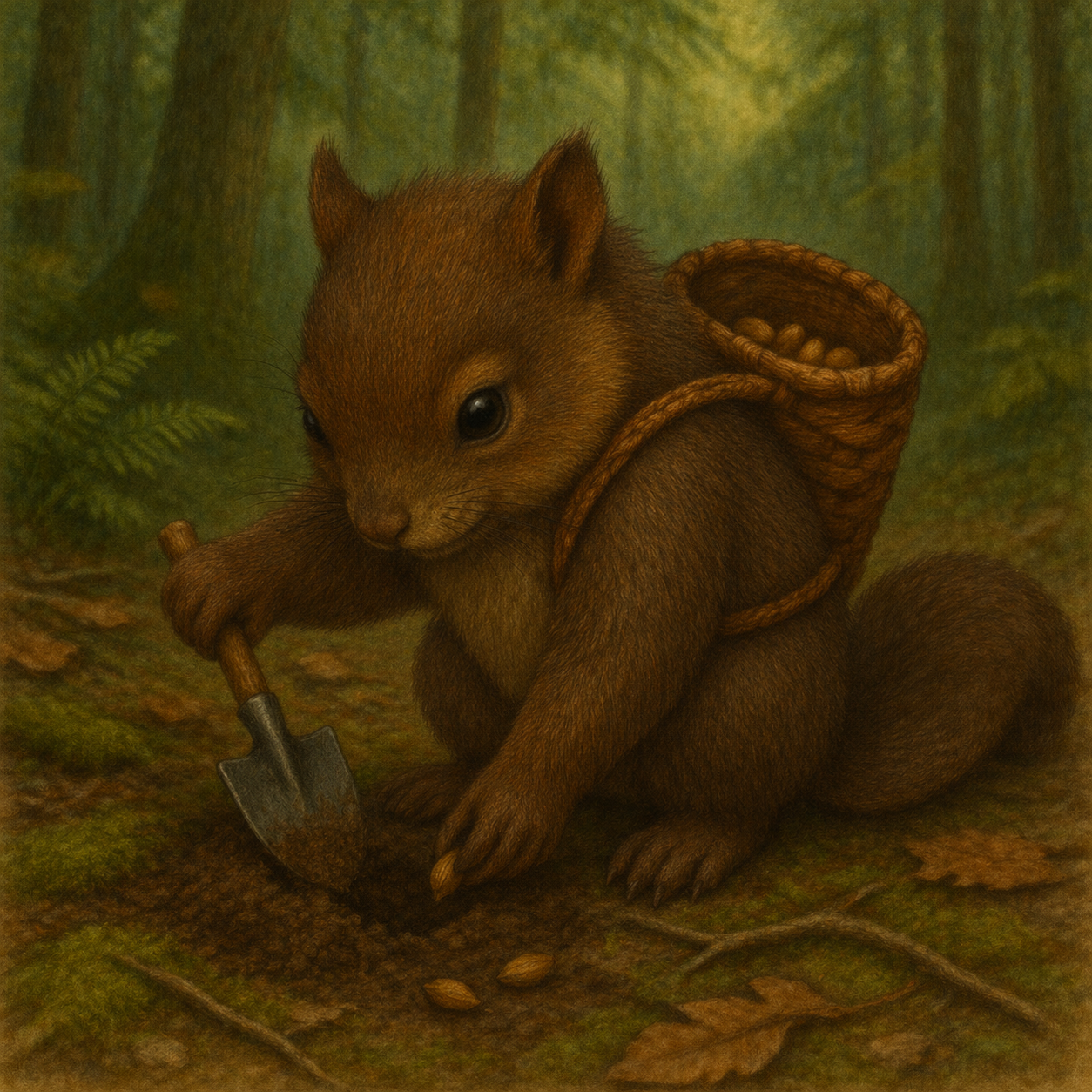
Le Boisnu is a small guardian of Michigan's forests, rarely seen except in the quiet hours following a violent storm. Where trees have fallen and young plants have been torn from the earth, he moves through the debris with a cedar pouch across his back, gathering seeds, bracing saplings, and pressing loose soil around exposed roots.
French voyageurs called him Le Petit Réparateur, the Little Repairman. They believed his appearance was a sign that the forest had begun to heal. Though Le Boisnu cannot raise a fallen tree or reverse the path of a tornado, he repairs what he can: one root, one nest, and one acorn at a time.
Guardian of the Damaged Forest
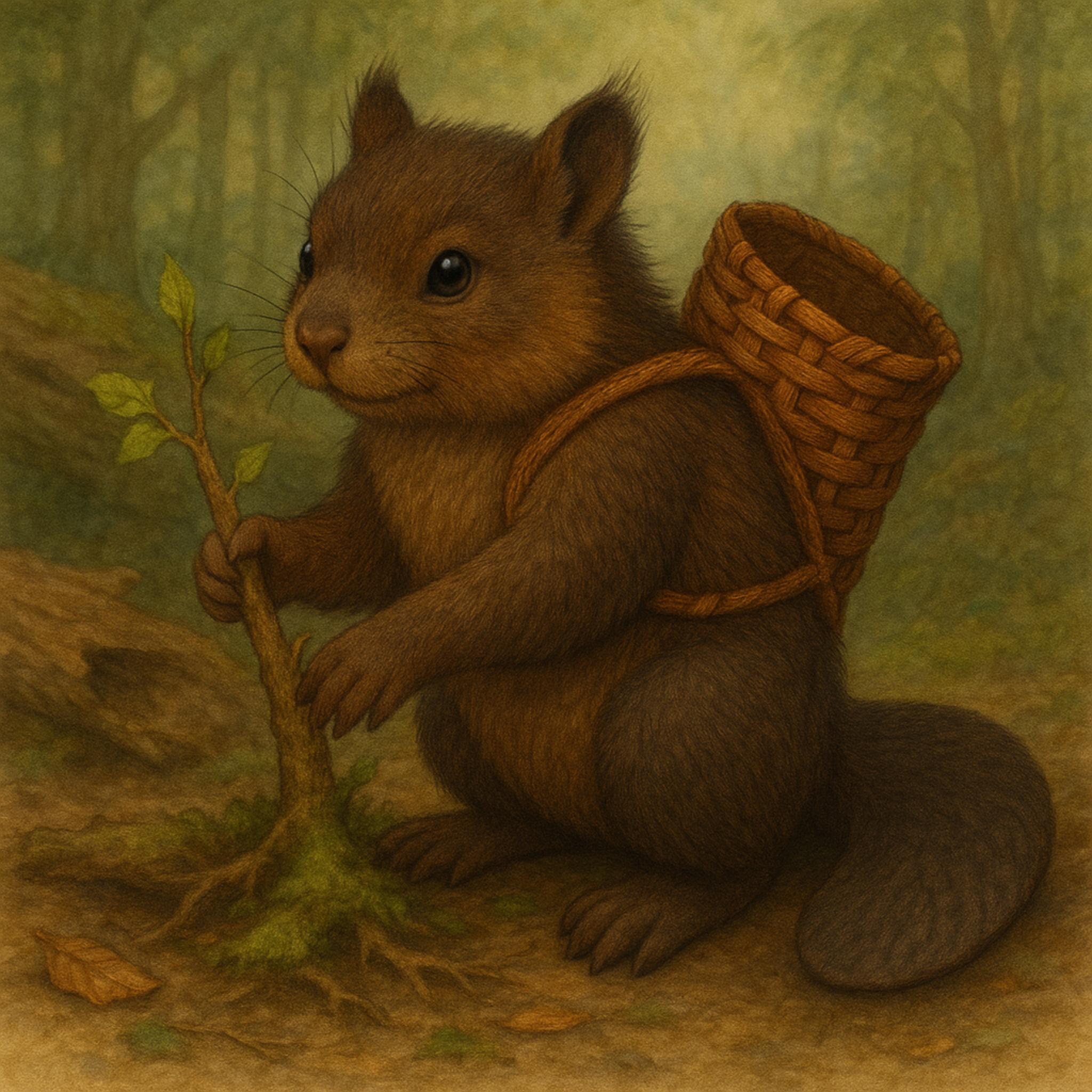
Le Boisnu appears after severe weather to repair the small damage others overlook. He presses seeds into exposed soil, repacks earth around damaged roots, braces young saplings with pine twigs, weaves moss over exposed root systems, and repairs small nests and animal shelters.
His broad, fur-covered tail works like a pine branch or paintbrush, tamping loose soil back into place. A roughly woven cedar-bark pouch carries acorns, bark fibers, twine, and whatever else the forest may need.
Voyageur Folklore
The earliest stories place Le Boisnu among French trappers and voyageurs traveling through Michigan during the 1700s. Seeing him was considered a good omen. Trappers avoided harming or capturing him, believing anyone who interfered with his work would suffer spoiled furs, tangled traps, broken paddles, or other persistent misfortune.
A small woven bundle found near a campsite after a storm, containing bark, reddish fur, nutshells, or an acorn cap, was sometimes interpreted as evidence that Le Boisnu had passed nearby.
The Kosinski Encounter
A later account places Jacob Kosinski near Comstock, Michigan, following a destructive tornado in June 1938. Kosinski reportedly observed a small reddish-brown creature moving deliberately through damaged woodland. It gathered twigs and leaves, repacked soil around an exposed root, and attempted to brace a young sapling.
He noted its unusually broad, bushy tail and the deliberate, almost craftsmanlike nature of its actions.
The Repair Satchel
Le Boisnu's primary artifact is a palm-sized repair satchel woven from cedar bark and natural fibers. It may contain acorns, bark strips, reddish fur, and a carved pinecone-shaped bead. Such a satchel may be recovered after a storm without a single human footprint nearby.
The Acorn
The acorn is Le Boisnu's symbol. It represents patience, renewal, and the enormous potential carried within one small action.
No act of restoration is too small to matter.